
Production Forecasting, Predictive Analytics, and Today’s Oilfield
Thursday June 16, 2016
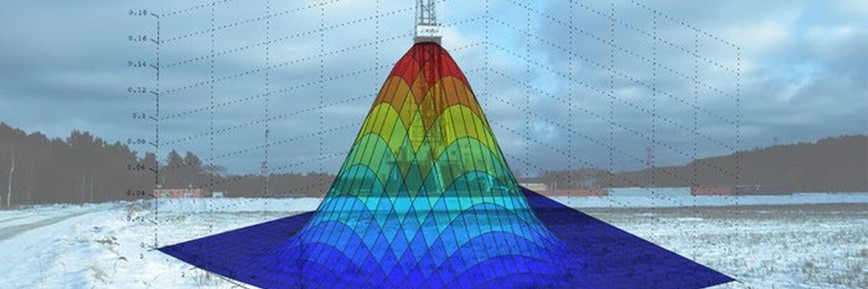
Harnessing the power of Big Data is without a doubt the biggest driver of business success today. For different companies and in different industries the incentives and motivations are as varied as weather. For the “excess capacity” ridesharing companies Uber and Lyft, for example, we as consumers see how good they are at locating a quick and inexpensive solution to our problem of needing to be somewhere else quickly. They mine the same data and see how much it is worth to their bottom line to prevent subjecting their “workforce” to local regulations. And with access to our individual travel patterns – down to the second from their mobile app – who knows what hidden forces they will soon uncover and start to further monetize.
The oil & gas industry is no stranger to big data, in fact the industry has arguably been working with big data longer than anyone else. The extreme data demands of exploration geophysics alone has been a major reason for many advances in computing power, and even today some of the biggest supercomputers spend large amounts of time calculating seismic volumes.
Today, however, computers are faster, programmers are smarter, product people are more keen to solve interesting problems, and investors expect a lot of return for their dollars.
Leading-Edge Multivariate Statistical Analysis for the Oil Patch
Let’s take a look at using big data analysis to identify best practices in a completion optimization plan. In a normal unconventional field the number of geological and engineering factors that can influence production are nearly infinite, with a few of the top-line factors being amount of proppant per foot, length of lateral, number of stages, wellbore spacing, distance to known faults or other impermeabilities, etc. Furthermore, even among the top line items I listed there are opportunities for redundant results – longer laterals are likely to have more stages – but we must be careful to make certain that the co-linearity of the similar data points do not create undue expectations in the final prediction.
Unsatisfied with the one-size-fits-all statistical tools like Spotfire and Tableau, Drillinginfo’s Transform Software has at its core a very sleek and modern multivariate statistical engine that allo...